
A field guide to techno-romanticism
Every industrial revolution has produced some form of Romantic backlash, where people run away from tech and towards the human, the medieval, the handmade, the… sublime.


There’s something romantic in the air.
Ted Gioia wrote about it. In our conversation in March, Robert Greene talked about how in periods of intense rationalism and darkness humanity bends towards rebirth and possibility. The Black Plague was followed by the Renaissance. The scientific revolution paved the way to the Enlightenment. The Vietnam War gave us Woodstock, etc. etc.
The new romanticism won’t look like the world joining hands and singing kumbaya. It will look, at first, like a yearning for ways of being/thinking/seeing that feel alive, creative, strange, personal, and free (followed, naturally, by a moment of profound spiritual clarity where you get a Sublime membership wink-wink).
Today we’re sharing a voice-y, historically literate, fun piece by Sithara Ranasinghe about the impulse to seek the sublime in periods of technological upheaval. You can follow Sithara’s work here.
Around here, we sit in the Venn diagram of love tech and hate tech. Which is why I was relieved that Sithara’s essay doesn’t end with “throw your phone into the sea.” We are not that pure. We love the internet.
Enjoy ;)
P.S. For premium members, below the paywall, a recording from yesterday’s fab session with Brie Wolfson and Tamara Winter on BECOMING IRREPLACEABLE.
Romanticism in the digital age
Every industrial revolution has produced some form of Romantic backlash, where people run away from tech and towards the human, the medieval, the handmade, the… sublime.
By Sithara Ranasinghe
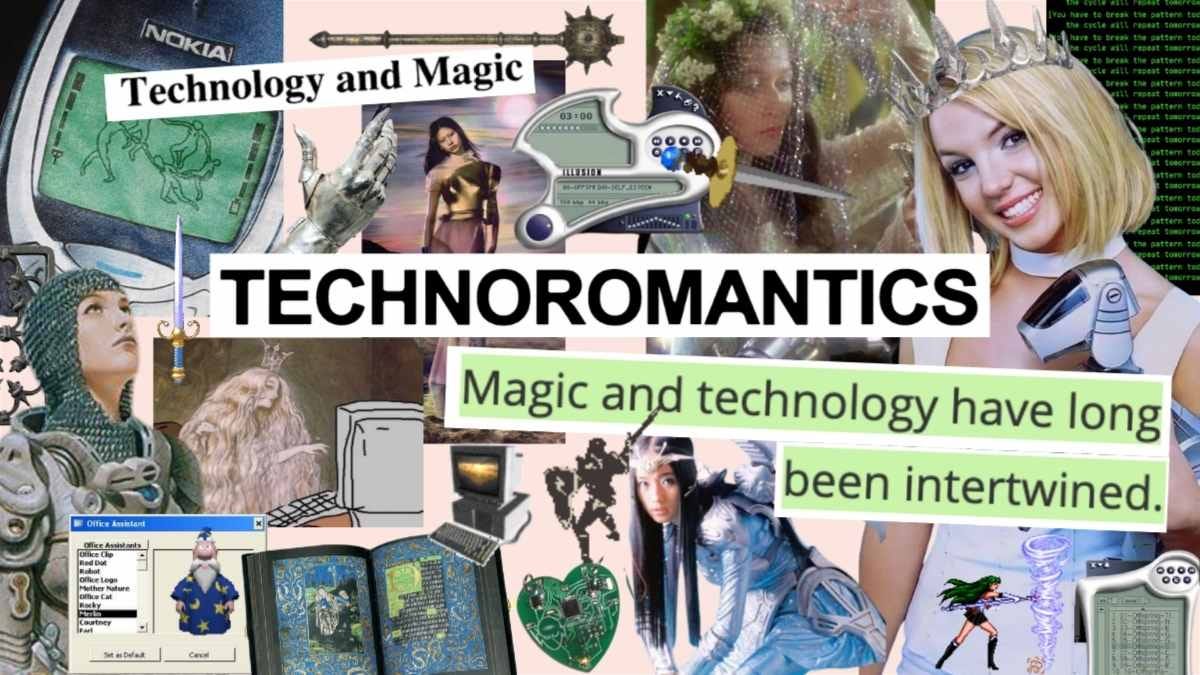
At this precise moment, I’m cheating on three separate friend groups who each believe that I will be joining their hypothetical countryside communes. After a slew of years defined by tech fatigue, it’s not too strange that so many of my friends have independently reached the conclusion that they need to return to the soil. Every industrial revolution1 has produced some form of Romantic backlash, where people run away from tech and towards the human, the medieval, the handmade, the… sublime. (Sorry.)
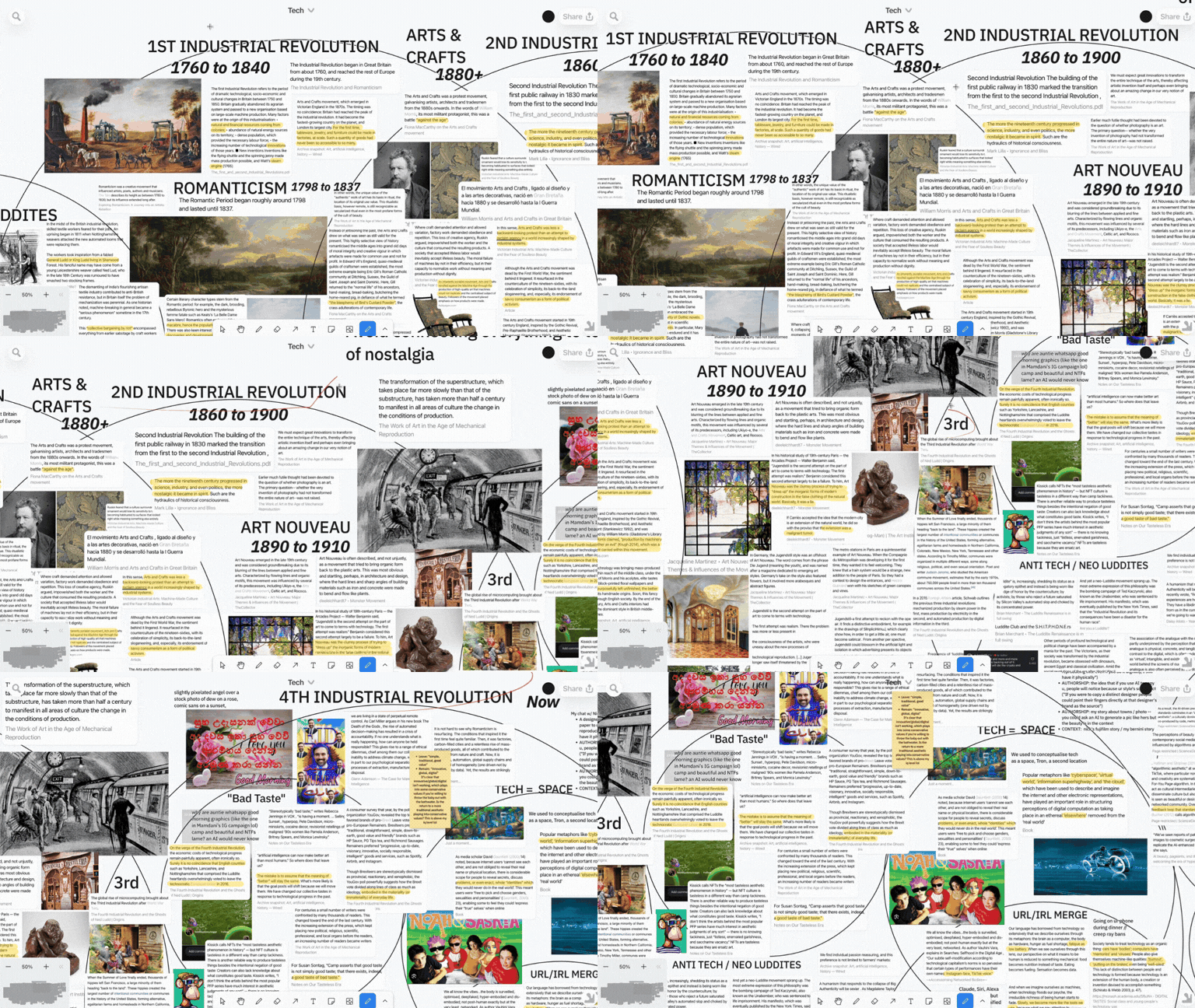
We’re currently living through a Fourth Industrial Revolution — artificial intelligence, algorithmic platforms, the total dominion of daily life by a handful of big tech companies. None of these communes are ever going to progress past the stage of googling “is farming hard?”, but my new state as a commune Casanova only hints at a tiny sliver of our current Romantic backlash. People are quitting social media, going back to handcrafts and ‘analogue living’.
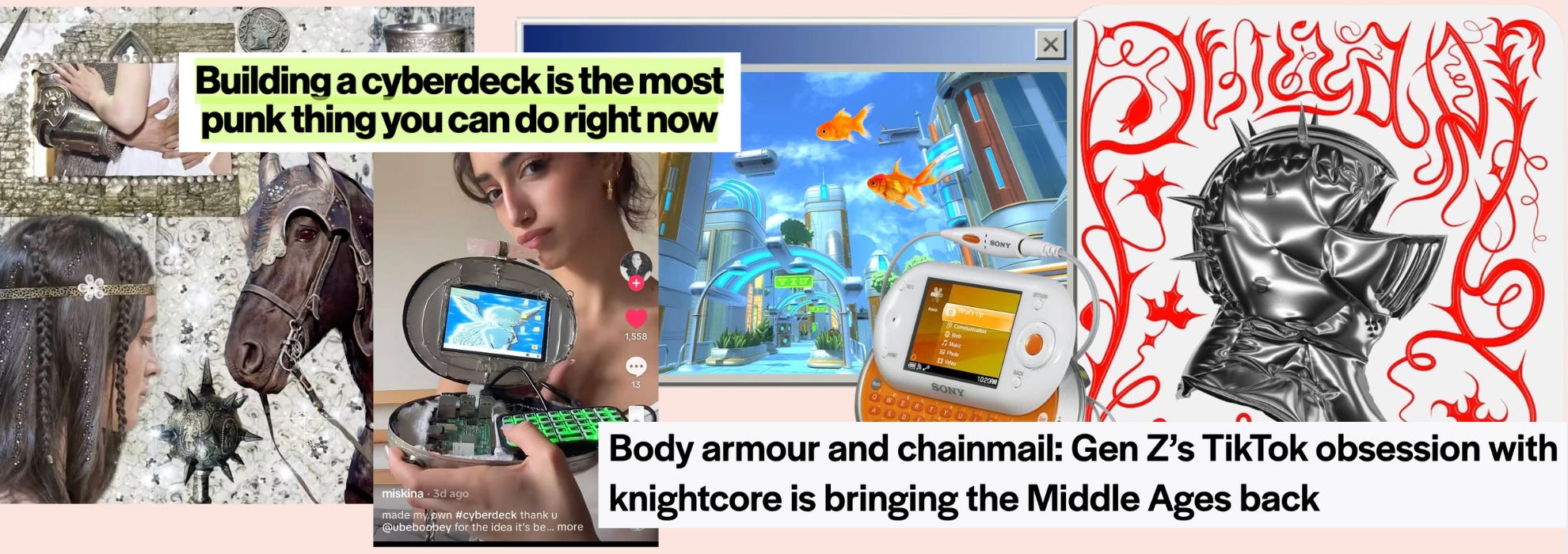
Yet a lot of this romantic longing is tied with distinctly digital aesthetics. Gen Z’s current yearning from the past is often expressed through visuals of old tech, or nostalgic visions of the future. Even our popular medieval aesthetics have a distinctly hard, shiny tech feel, centred less on princesses and more on knights — faceless metal humanoids who, at a stretch, might resemble a robot. If we take a journey though the Romantic backlashes to the past 3 industrial revolutions, perhaps we can understand why this one’s different.

My friends aren’t the first people to get the idea to run away to the countryside. The First Industrial Revolution replaced weavers with power looms, spawning factories all over cities. Poet William Blake described them as “dark Satanic mills” which, upon my first read, felt like it carried a really similar energy to when I was 14 and I’d call my mum a fascist. But unlike me (sorry ma), Blake had a point.
Instead of working from or near home, workers moved close to factories. As more and more workers packed into cities, they became crowded and polluted — a living symbol of everything that was wrong with technological progress. In response, the Romantics escaped to “England’s pleasant pastures”. The countryside was more serene, but also more representative of the medieval times the Romantics valorised.
But, as anyone who has tried a ‘digital detox’ might tell you, it’s not quite so easy any more to simply go where the machines aren’t. You can’t escape cyberspace by going to the Lake District because cyberspace is in your pocket and the Lake District has 4G signal.
In the days of Tron and Spy Kids, the internet was described as an almost physical realm where we could walk around and leave our ‘digital footprints’. There was a clear delineation between the ‘real world’ (IRL) and the ‘virtual world’ (URL?) where the laws of physics worked differently. But with the invention of the smartphone, the barriers between URL and IRL have been growing thin, like the mortal veil in an 80s ghost movie. Not only are our avatars direct mirrors of our real selves (I can see your full name and employment history on LinkedIn) but we’re flicking between worlds faster and faster. You might check your Hinge messages during dinner, or watch some TikToks on the bus. The cyber world is engulfing the real one, and there are ghosts everywhere.
So if the ‘virtual world’ is treated as a physical space, social anthropologist Dr Alexander E.R. Taylor argues that the analogue world is too. “If the rural idyll [of the Romantics] offered a vision of a time and place free from the malaise of urban life,” he suggests, “the analogue idyll offers a vision of a time and place free from the malaise of digital life.”
Instead of fleeing to nature, we’re fleeing to vinyl and zines and cyberdecks.

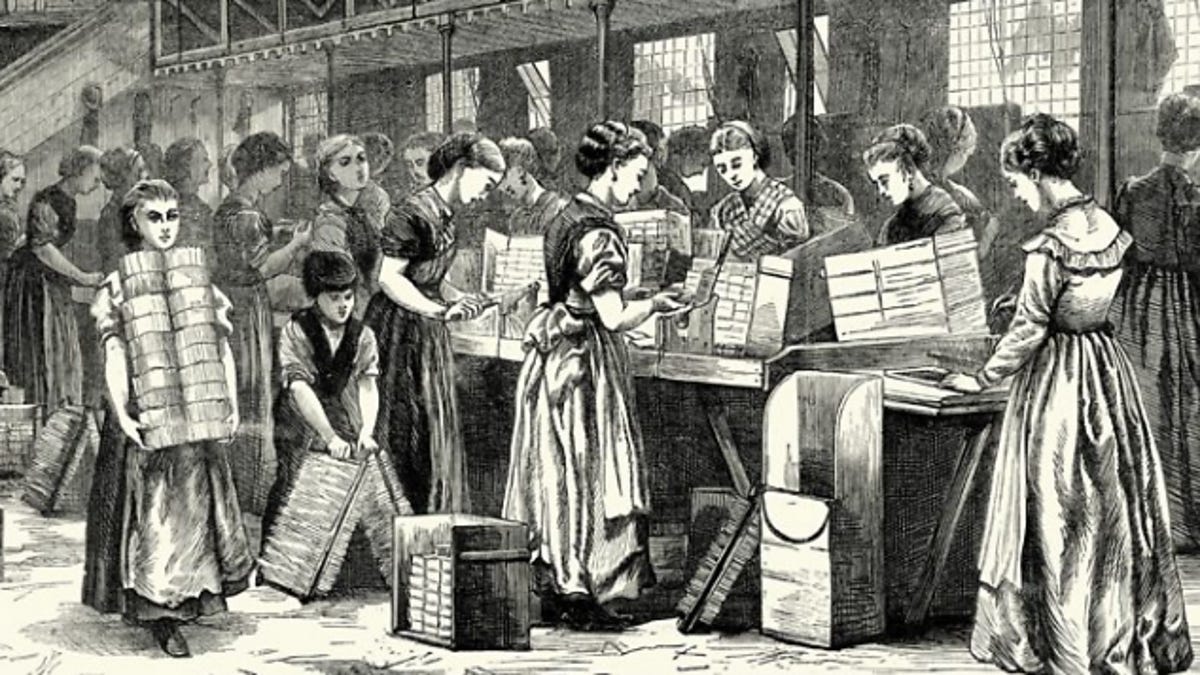
19th century factory owners used steam power and assembly lines to turn Britain into the “workshop of the world”. Victorian homes began to fill up with cheap, mass-produced tat — or as William Morris called it, “devilish capitalistic botch.” Much like Oliver Twist, he had a very significant relationship to Victorian slop.
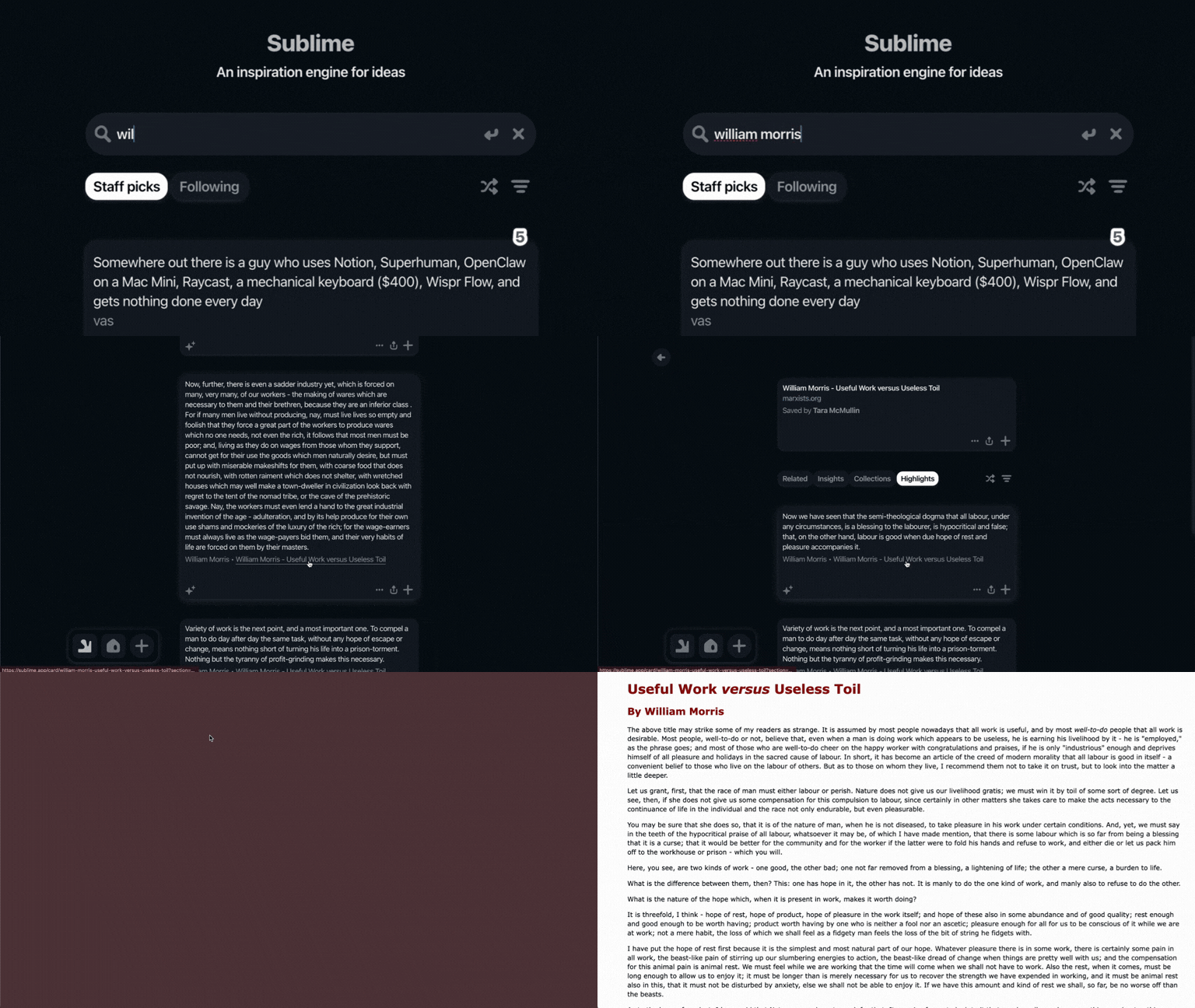
Morris was one of the loudest critics of the industrial revolution. He started a protest movement known as Arts and Crafts, which he described as a battle “against the age”.
The goal was to remedy the way mass production was alienating workers from their craft and labour. Morris longed to return to the medieval cottage industry where artisans hand-build useful, beautiful items from their homes.
To emphasise the handmade origin of his products, he left defects as signs of life, leaving his furniture unfinished to show its wood grain. But, as any small business owner might sympathise with in 2026, factory owners just took his designs and mass-produced them wholesale.
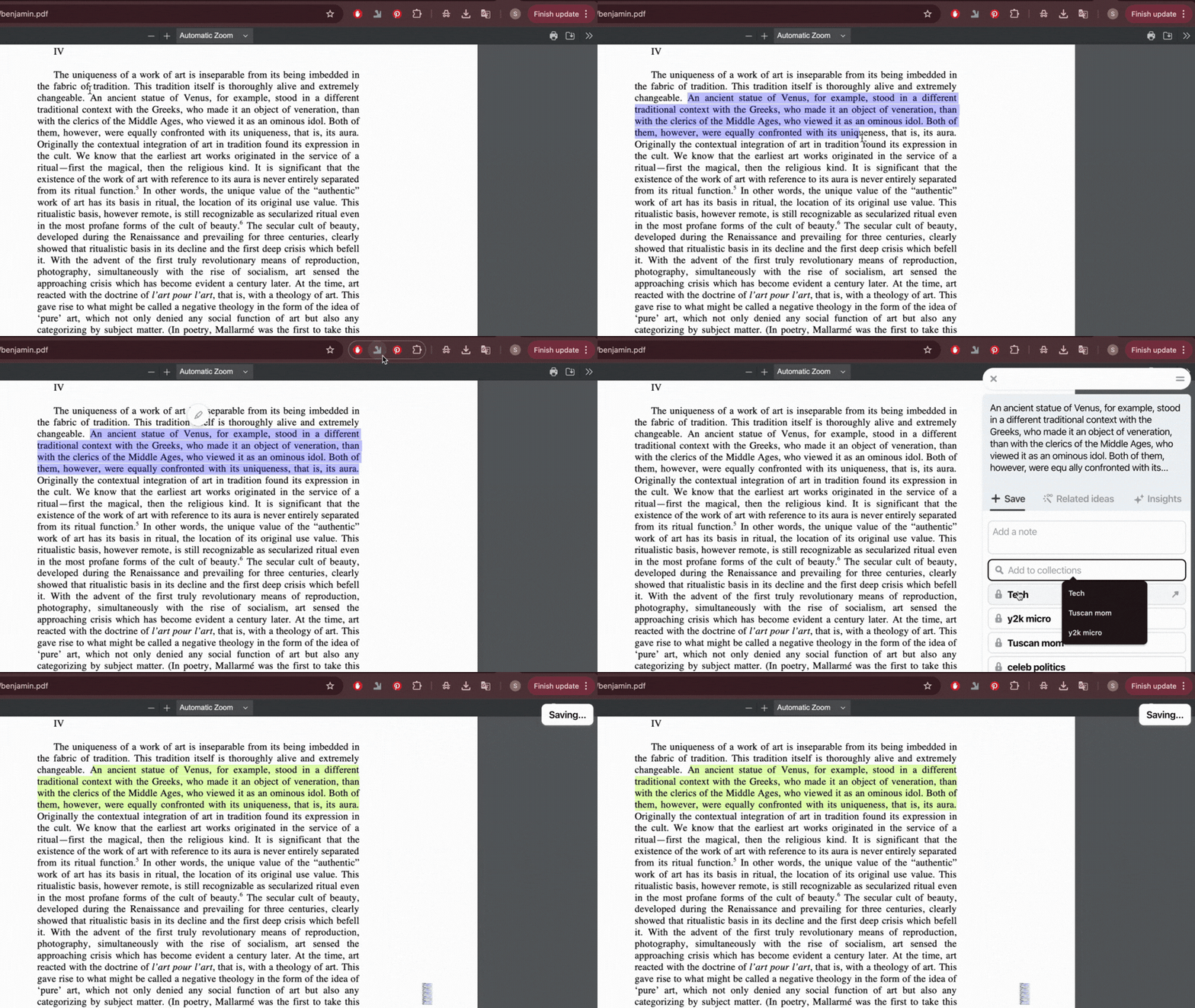
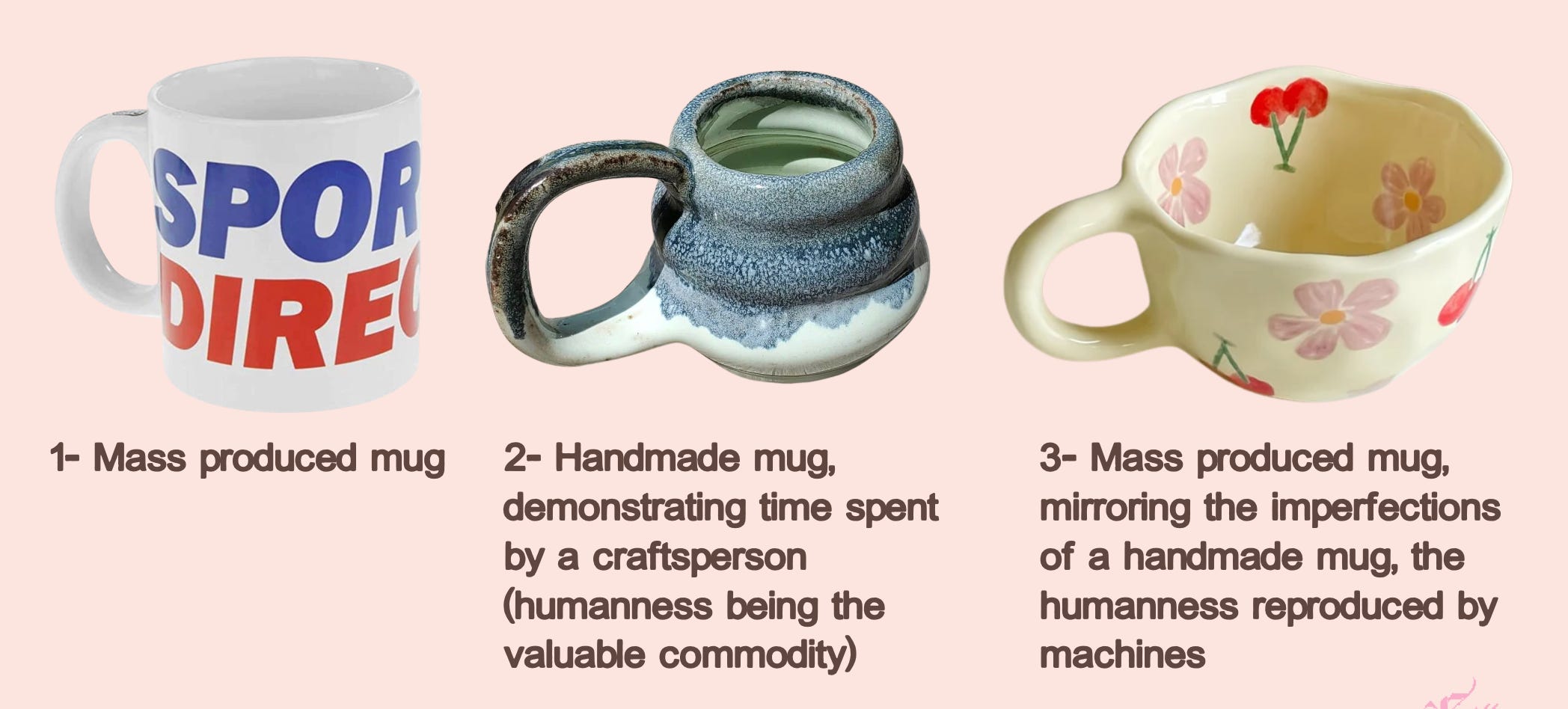
Morris’ instinct to leave marks of human life (let’s call it a humanprint) is back today. Human artists (f.k.a. ‘Artists’ </3) are using defects as signs of a human auteur. You might prefer a mug with streaky glazing to a Sports Direct mug because there’s evidence it was made by an artisanal potter and not a child slave in a factory. Walter Benjamin might have called this ‘aura’, but in the AI age, we might also call it soul.
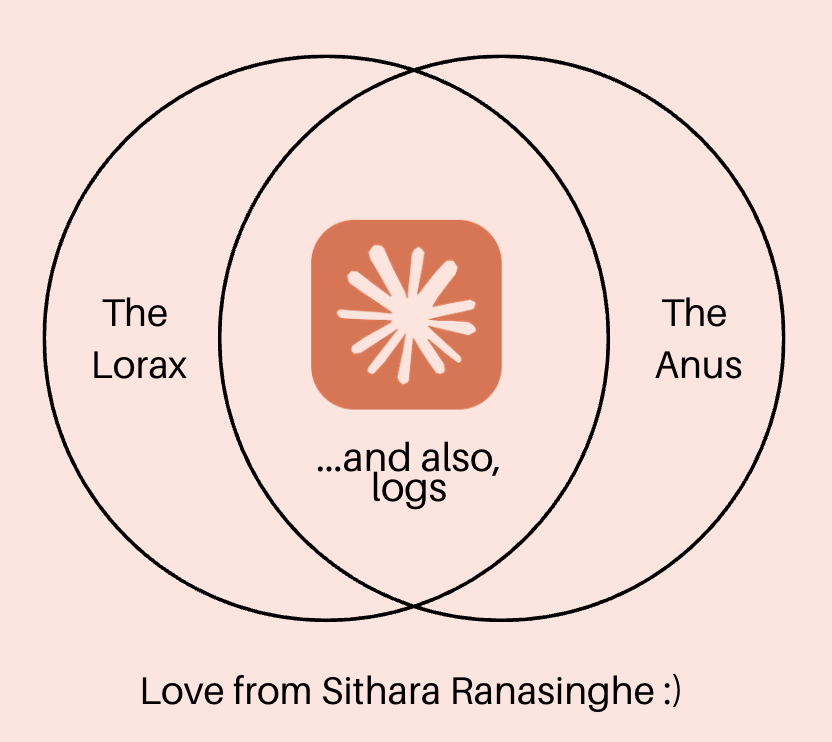
You can see humanprints everywhere in the digital world. The logo for bakery Jolene was hand-drawn by the graphic designer’s six-year-old, and it was celebrated by the design press as a conscious counterpoint to AI-generated aesthetics. But AI companies can use that visual language too — they can even generate it themselves if they want to. Think about Claude’s hand-drawn logo, rendered in warm, earthy terracotta on an ecru or charcoal background. It’s so human — a teenager’s sketch of a Lorax anus — that it bypasses any natural mistrust we might have for machines.
Subscribe

The Third Industrial Revolution is generally time-marked from the 1950s to the 2000s. This spans satellites, lasers, email, GPS, touchscreen, biogenetics, drones and, most importantly to me personally, Tamagotchis.
While there was a movement in the 1960s and 70s to return to the land, and to communal, medieval values, this was a backlash against The System, not tech. So where’s our Romanticism this time?
In his 1999 book Technoromanticism, Richard Coyne argues that ideas of Romanticism are pre-baked into the way we speak about computers. He writes, “The IT world, from computer games to supposed anarchy on the net, … celebrates romantic medievalism, its tangled aesthetic, its sense of carnival, and the chaos of the marketplace.”
Instead of escaping new tech to go back to medieval times, we would go back to medieval times using tech. The internet would connect humanity into a global village, and craft — computer craft — would be valued again. Most romantically of all, we would use our new machines to return to a time of magic.2
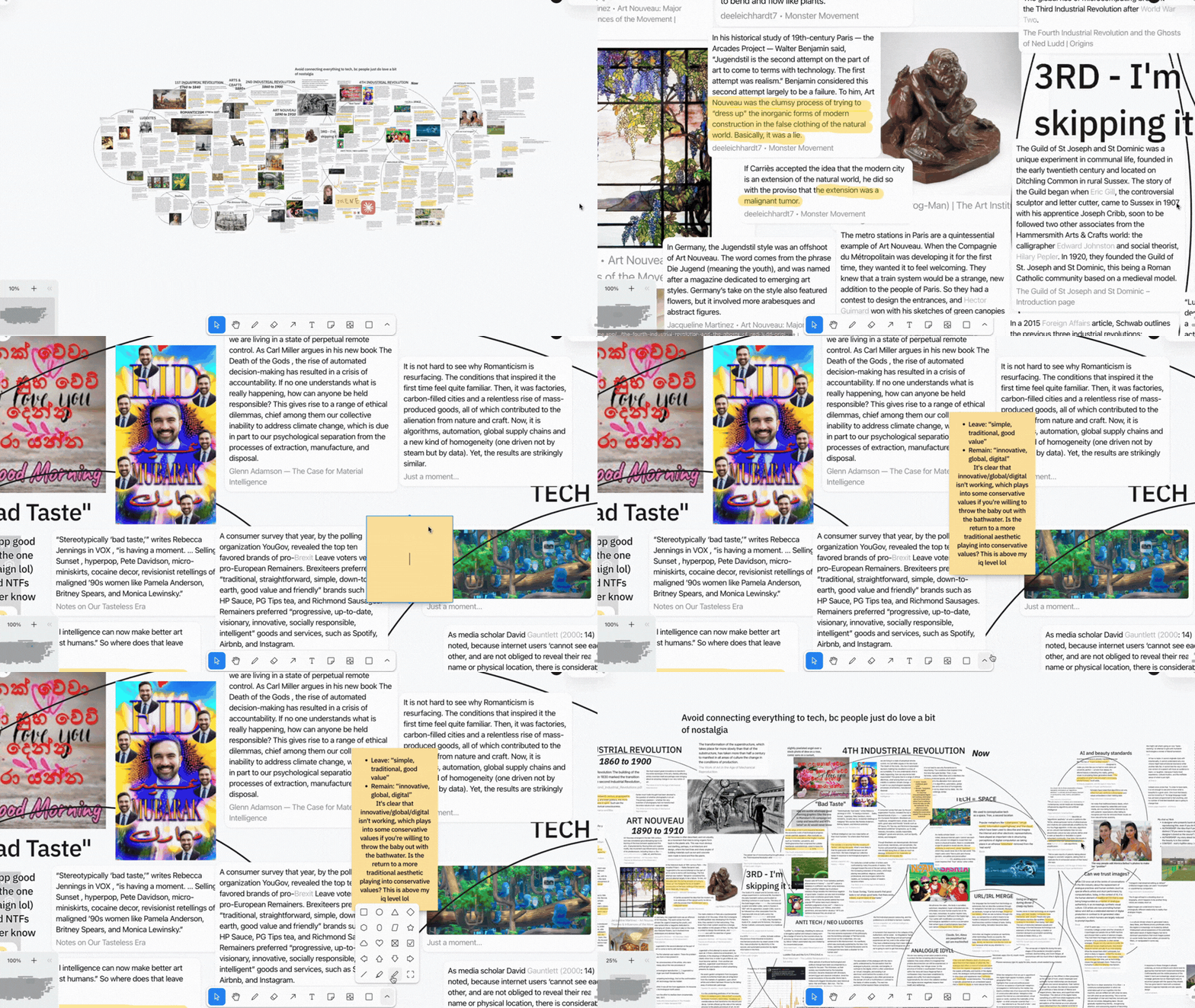
From the very beginning, the internet described itself in the language of sorcery. Computers were quasi-magical items — the majority of people didn’t understand how they worked, and those who did were referred to as “wizards”. The 1985 textbook Structure and Interpretation of Computer Programs (nicknamed the “Wizard Book” for its cover) reads, “A computational process is indeed much like a sorcerer’s idea of a spirit.”
This idea that tech is quasi-magical and unknowable has only embedded more and more in our current culture, with AI commonly compared to a genie. Peter Nagy and Gina Neff have made the case that modern tech companies deploy the language and tricks of magicians “to create a ‘magical aura’ around their technologies while distracting the public from being able to see through their illusions.” 3

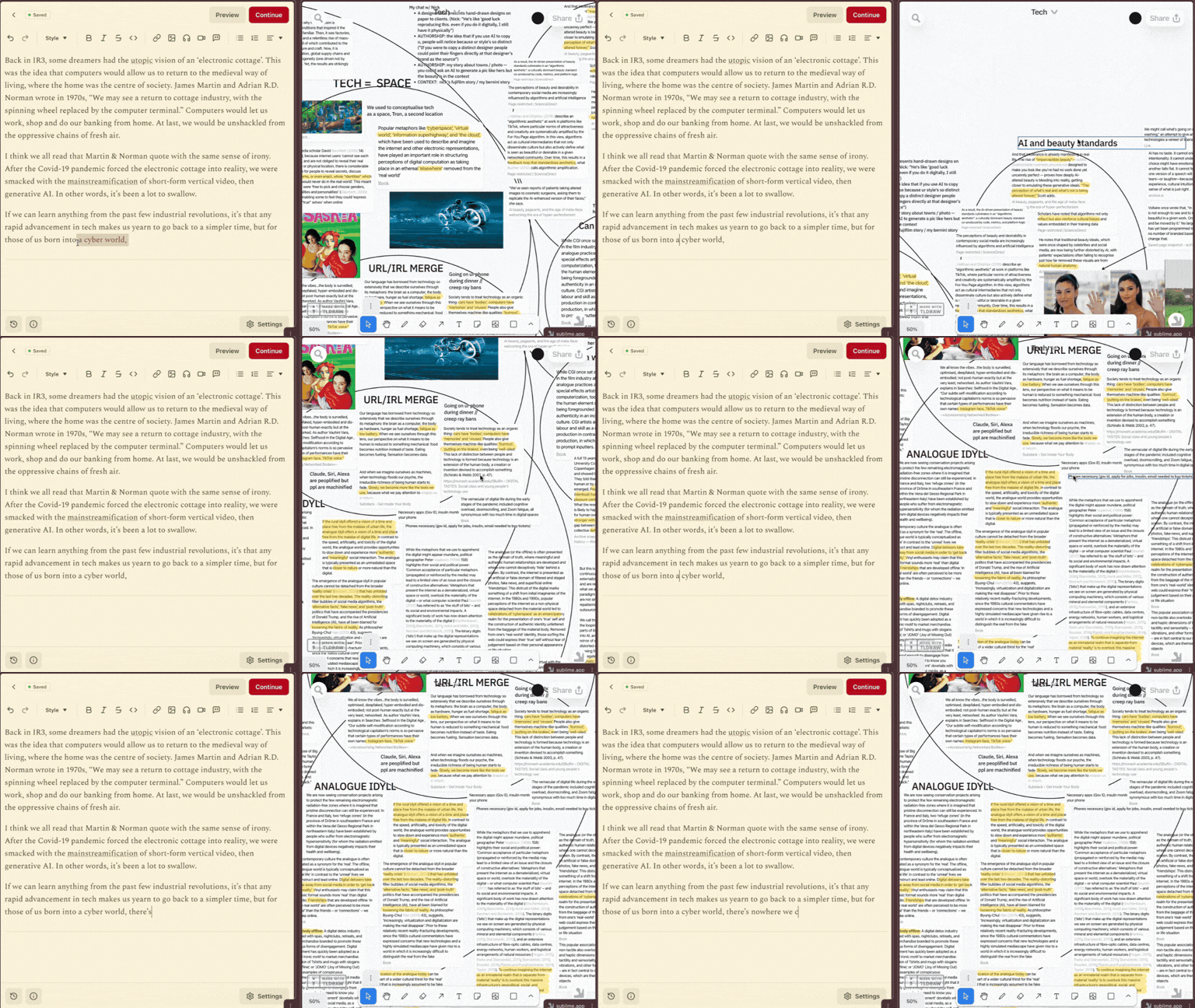
Back in IR3, some dreamers had the utopian vision of an ‘electronic cottage’. This was the idea that computers would allow us to return to the medieval way of living, where the home was the centre of society. James Martin and Adrian R.D. Norman wrote in 1970s, “We may see a return to cottage industry, with the spinning wheel replaced by the computer terminal.” Computers would let us work, shop and do our banking from home. At last, we would be unshackled from the oppressive chains of fresh air and grass.
I think we all read that Martin & Norman quote with the same sense of irony. What was a utopia to them has stopped feeling fun any more. The medievalism we’re projecting onto tech is less of a revel and more of a feudal system.
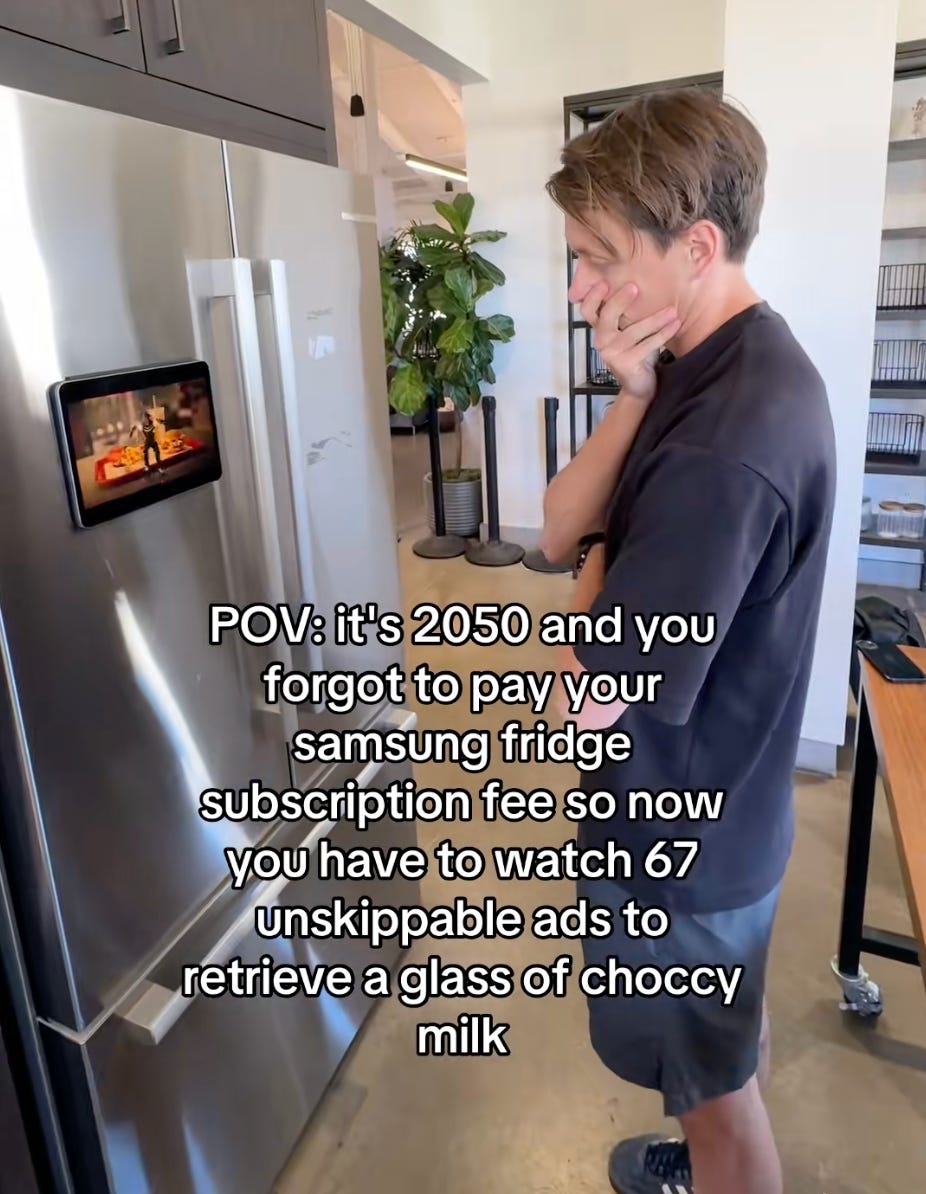
Technofeudalism is the idea that Big Tech companies will have powers similar to medieval feudal lords. People and businesses rely on Meta the way peasants once relied on lords. Us serfs must perform free labour (content creation) in exchange for our plot of land in cyberspace. Even those of us who never post still become serf-like in that we won’t fully own anything — good luck accessing your midnight BabyBels if you miss your Smartfridge payments. Or at least, that’s the idea.
If you look at the past few Industrial Revolutions, one thing that crops up again and again is this desire to ‘return’ to a pre-industrial golden age, even if that return is mediated through computers. Something slightly different is happening with IR4.
In a recent NBC News poll, nearly half (47%) of adults aged 18-29 said if they had the option, they’d choose to live in the past, with many specifically citing the very recent past. While there’s definitely some romanticisation of certain medieval-inspired aesthetics and lifestyles, our romantic ‘return’ seems to be more focused on that IR3 early internet era where tech felt exciting instead of oppressive. People are building cyberdecks to escape algorithms, or ditching Meta to explore niche corners of the internet.
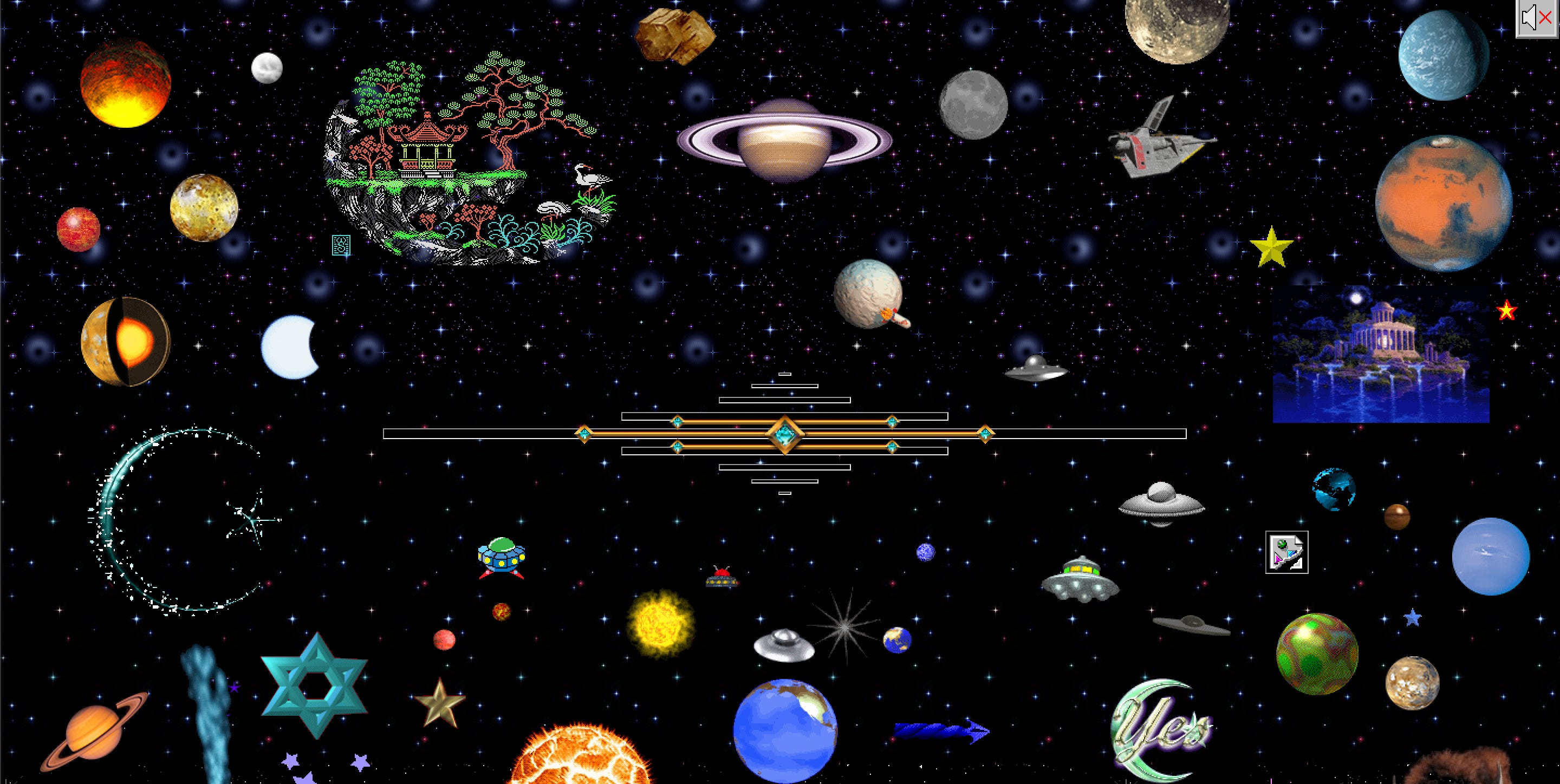
One of my favourite niche websites is Cameron’s World, a net.art collage that archives defunct GeoCities websites from the 2000s. At the top of the collection, each website is represented by a planet, and — at least from my hazy childhood memory — that’s really how it felt to browse the net back then.
I’ve always found the internet amazing, and you’ll never catch me throwing my phone under a cybertruck. What I need, though, is the restraint to use the internet on my own terms. I definitely think a step in the right direction would be to lower my reliance on the big Broligarchy-run platforms, and also to educate myself on tech to demystify the “magic” of it all. And if, in the end, I do wind up milking chickens in a commune, I only hope our farm has a computer room.
Speaking of non-Broligarchy-run platforms, you can use code SITHARA for 20% off a Sublime subscription!
To view my further reading and sources, as well as all the tangential thoughts that didn’t make it into the essay, check out my Sublime collection here. I had a lot of fun making it.
Thank you sihaam and Nick for chatting with me about this topic! <3

Subscribe
Pitstop! Let’s define the industrial revolutions loosely while we’re here. I’m not an expert, so I’m going to quote Dr. Haradhan Kumar Mohajan:
”During the first industrial revolution (IR1) human and animal labor technology converted into machinery, such as the steam engine, the spinning jenny [loom], puddling and rolling processes for making iron, coke smelting, etc. During the second industrial revolution (IR2) electricity, internal combustion engine, indoor plumbing, chemical industries, etc. technologies are developed. The third industrial revolution (IR3) began in the 1950s that is considered as the move from mechanical and analogue electronic technology to digital electronics. Nano, bio, and IT technologies, 3D printing, artificial intelligence, robotics, etc. are the most important driver of the IR3.” (https://mpra.ub.uni-muenchen.de/110972/)
Nagy, P., & Neff, G. (2024). Conjuring algorithms: Understanding the tech industry as stage magicians. New Media & Society, 26(9), 4938-4954.

 | A guest post by
|